Gallstones: Causes, Symptoms & When Surgery is Needed
- Home
- Gallstones: Causes, Symptoms & When Surgery is Needed
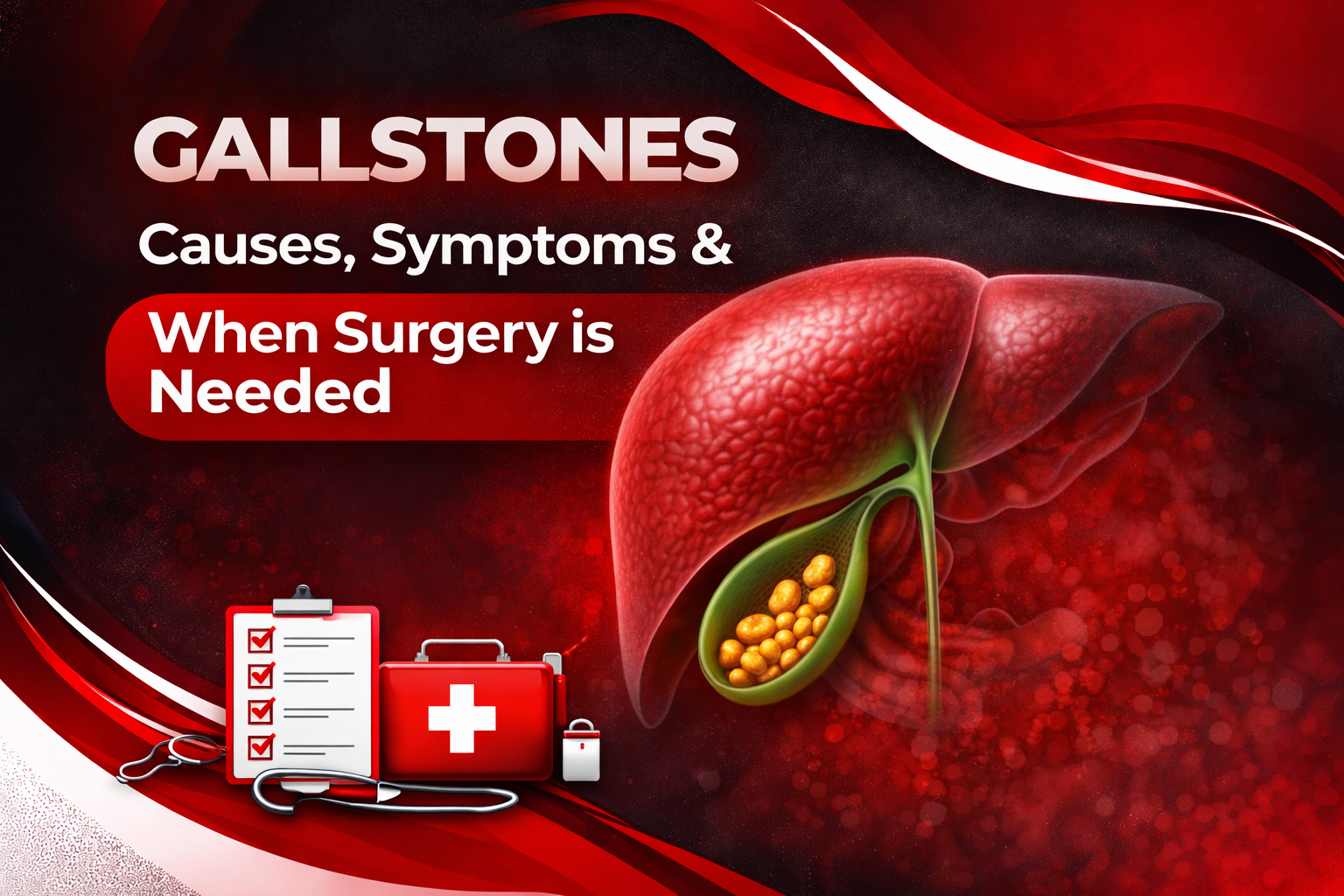
Gallstones are one of the most common digestive health problems affecting people today. Many individuals may have gallstones without even realizing it, while others may experience severe pain and complications.
Understanding the causes, symptoms, and treatment options for gallstones can help you take timely action and avoid serious health risks. With modern surgical advancements, gallstone treatment has become safe, effective, and minimally invasive.
Gallstones are hardened deposits that form inside the gallbladder, a small organ located beneath the liver. The gallbladder stores bile, a digestive fluid that helps break down fats.
These stones can vary in size—from as small as a grain of sand to as large as a golf ball—and may block the flow of bile, leading to pain and complications.
There are mainly two types of gallstones:
The most common type, formed due to excess cholesterol in bile.
Formed due to excess bilirubin, often associated with liver or blood disorders.
Gallstones can develop due to multiple factors, including:
Lifestyle and dietary habits play a major role in their development.
Many people with gallstones may not experience symptoms. However, when symptoms occur, they may include:
These may indicate complications like infection or bile duct blockage.
If left untreated, gallstones can lead to serious health issues such as:
Timely treatment helps prevent these complications.
Gallstones are diagnosed using:
Early diagnosis ensures proper treatment planning.
If gallstones are not causing symptoms, they may be monitored without immediate surgery.
The most effective and permanent treatment for symptomatic gallstones is gallbladder removal surgery (cholecystectomy).
This is the most commonly performed and safest method today.
Many patients worry about life after surgery, but the good news is:
While not all gallstones can be prevented, you can reduce risk by:
You should consult a specialist if:
Early consultation ensures safer and simpler treatment.
Dr. Banshidhar Soni provides advanced treatment for gallstones using minimally invasive techniques, ensuring faster recovery and long-term relief.